
How to Use AI Without Giving Up Your Judgment
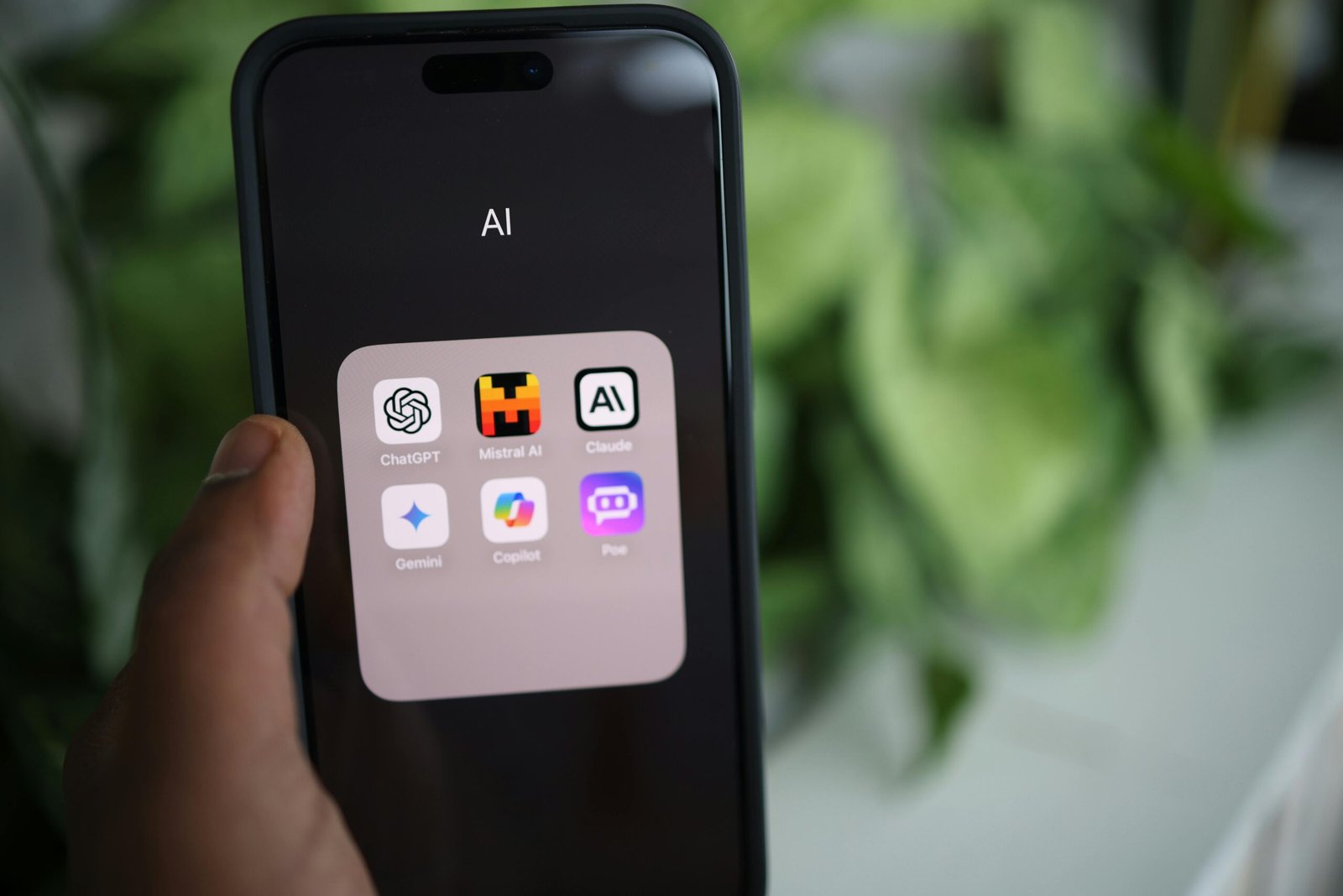
AI has become easy to reach for. It can draft, summarize, organize, reword, brainstorm, and answer almost instantly. That convenience is part of its appeal, but also part of the risk. The more natural it sounds, the easier it is to mistake fluency for wisdom. UNESCO’s recent media-literacy campaign puts it plainly: AI can make mistakes, and critical thinking still matters. It warns that AI systems can produce believable but false information, and that human judgment remains essential.
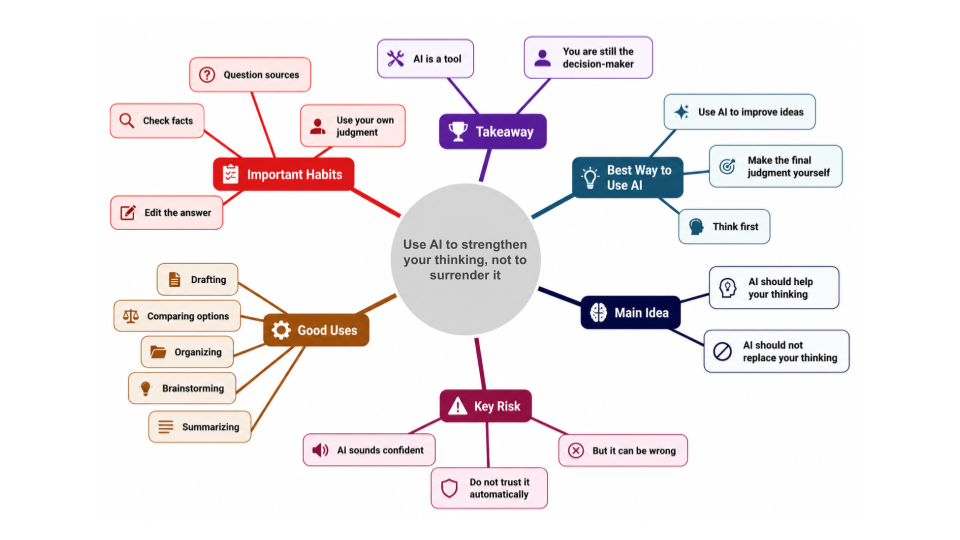
This is the point of view I keep coming back to: AI is most useful when it supports thought, not when it quietly replaces it.
I do not think the healthiest way to use AI is to treat it as an all-knowing authority, nor do I think the answer is to reject it entirely. The better approach is more measured. AI can be a helpful assistant, but it should remain an assistant. The moment it starts doing all the deciding, all the interpreting, or all the concluding for us, something important begins to thin out. The work may get faster, but the thinking often gets weaker. That concern is echoed in the OECD’s 2026 Digital Education Outlook, which says generative AI can improve performance on tasks, but that offloading cognitive work to general-purpose chatbots does not necessarily lead to real learning and can create risks of disengagement and “metacognitive laziness.”
When Convenience Bcomes Overreliance
What makes AI so persuasive is not only speed, but tone. It often presents information in a smooth, coherent, confident way. That can create a false sense of certainty. UNESCO notes that large language models can generate invented quotes, false statistics, and made-up sources while sounding entirely credible. That is exactly why using AI well requires a certain amount of resistance. Not fear, but pause. Not suspicion of everything, but enough independence to ask, Does this actually make sense?
I think this matters just as much in ordinary life as it does in school or work. If you use AI to help plan your week, structure a difficult email, summarize a long article, or think through a decision, it can be genuinely helpful. But there is a difference between using it to clarify your thoughts and using it to replace them. One sharpens your own judgment. The other slowly trains you not to use it.
A Better Way to use AI
The most useful way I have found to approach AI is to bring it into the middle of the process, not the end of it. I do not think it should be the first mind in the room, and it certainly should not be the final one. It is better used after you already have some direction of your own.
That might mean writing your own rough opinion before asking AI to organize it. It might mean reading an article yourself before asking for a summary. It might mean using AI to generate options, but not to make the decision. This is where the tool becomes most valuable: not as a substitute for judgment, but as a way to extend, test, refine, or challenge your thinking. The OECD describes the more constructive path in similar terms, noting that AI can improve learning and foster skills like critical thinking, creativity, and collaboration when it is used with clear intent rather than as a shortcut around cognitive effort.
That distinction feels important beyond education. In everyday life, intentional use matters too. If the task is one you should still be learning to do yourself—thinking, deciding, evaluating, understanding—then AI should help you engage more deeply with it, not excuse you from it.
Clear Prompts are Helpful, but Clear Thinking Matters More
There is also a practical side to this. Better prompts do usually lead to better answers. OpenAI’s Prompting Fundamentals guide says ChatGPT works best when you give it clear instructions, useful context, and a clear idea of the kind of output you want. It also recommends breaking big tasks into smaller steps and iterating as needed.
That is useful advice, but I think there is a deeper point underneath it. Learning to prompt well is not only about getting smoother output. It also forces you to become clearer about what you actually want, what matters most, and what question you are really asking. In that sense, prompting can be valuable when it sharpens your own thinking first.
Still, even a well-written prompt does not remove the need to verify, edit, and judge. UNESCO’s guidance is simple and still the most useful: pause before sharing, question the source, diversify where you get information, and learn how AI systems work. Those are not technical habits. They are thoughtful ones.
Essential Takeaway
Use AI as a tool for support, not a substitute for judgment. The most valuable habit is not asking AI for more answers, but staying thoughtful enough to decide which ones deserve your trust.
What I Think AI is Best For
In my view, AI is best used for support tasks: helping you start, helping you sort, helping you reframe, helping you see a problem from another angle. It is excellent for momentum. It is less trustworthy as a final authority.
That means I find it most helpful for drafting, outlining, simplifying, comparing options, or surfacing questions I may not have thought to ask. I trust it much less for conclusions I have not examined, facts I have not checked, or opinions I have not arrived at myself. Used that way, it becomes less of a replacement mind and more of a working partner—one that is fast, useful, and imperfect.
And perhaps that is the healthiest relationship to build with it now: one that is engaged, but not dependent. Curious, but not unquestioning. Open, but still alert.
In the end, I do not think the goal is to prove that we can live without AI. The goal is to use it without handing over the parts of ourselves that matter most. Speed is useful. Help is useful. Efficiency is useful. But judgment, discernment, and the ability to think something through for yourself are still worth protecting. Know and understand this – it is very possible that AI make mistakes, but we as a user, do not have to let it do all the thinking.