
Unplugged: Everything You Actually Need to Know About Travel Adapters
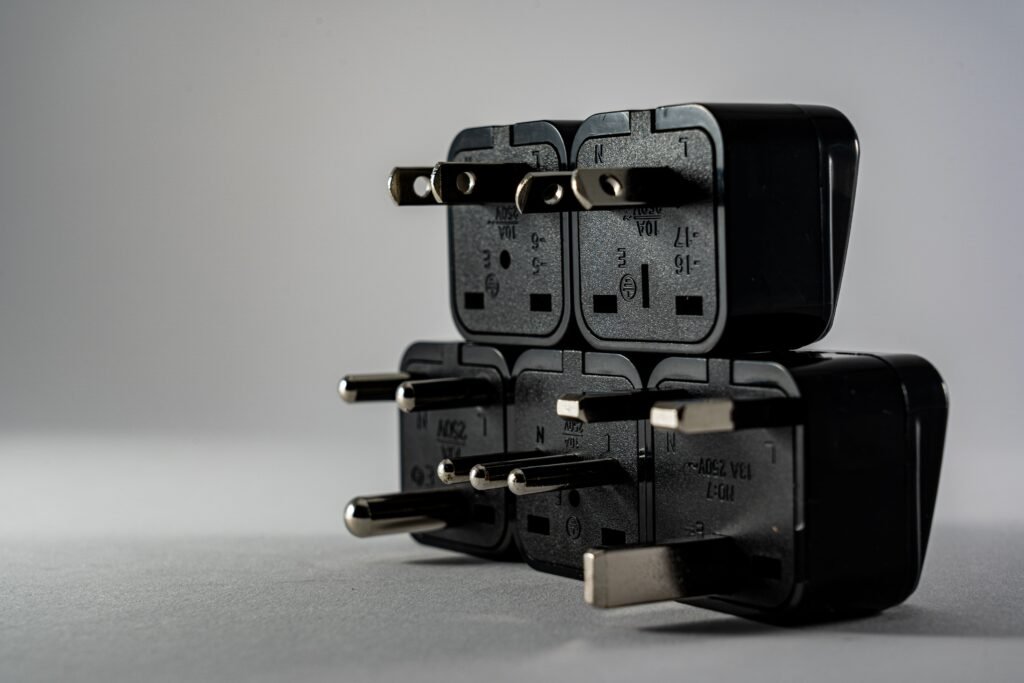
Travel adapters are one of those small things that seem unimportant until they are suddenly not. The moment usually arrives late — in a hotel room, after a long journey, with a low phone battery and the quiet realisation that your charger does not fit the wall.
I have come to think of travel adapters the same way I think about good luggage or a reliable passport holder: not glamorous, but deeply useful when chosen well. And yet they are still one of the most misunderstood travel essentials. Too many people buy them in a rush, assume one shape fits everything, or confuse an adapter with a converter. The result is often either inconvenience or, in the worst cases, unsafe use.
The first thing worth knowing is also the most important: a travel adapter only changes the shape of the plug so your device can fit into a foreign socket. It does not convert voltage or frequency. Electrical Safety First states this very plainly, and it also warns that using an appliance at the wrong voltage can be extremely dangerous.
The Distinction That Matters Most
This is the part I wish more people understood before they travel. If your device is already dual voltage, you usually only need an adapter. If it is single voltage, you may also need a converter or transformer depending on where you are going. Electrical Safety First advises checking the appliance rating plate or power supply: if it says something like “INPUT: 110–240V”, it is dual voltage and generally only needs the correct plug adapter in countries within that range.
That is why most modern phone chargers, laptop chargers, camera chargers, and many small electronics travel more easily than people expect. In many cases, the charger brick is already built for a wide voltage range. The real question is not whether your device can handle the power, but whether the plug can physically connect.
Why This Feels More Confusing Than it Should
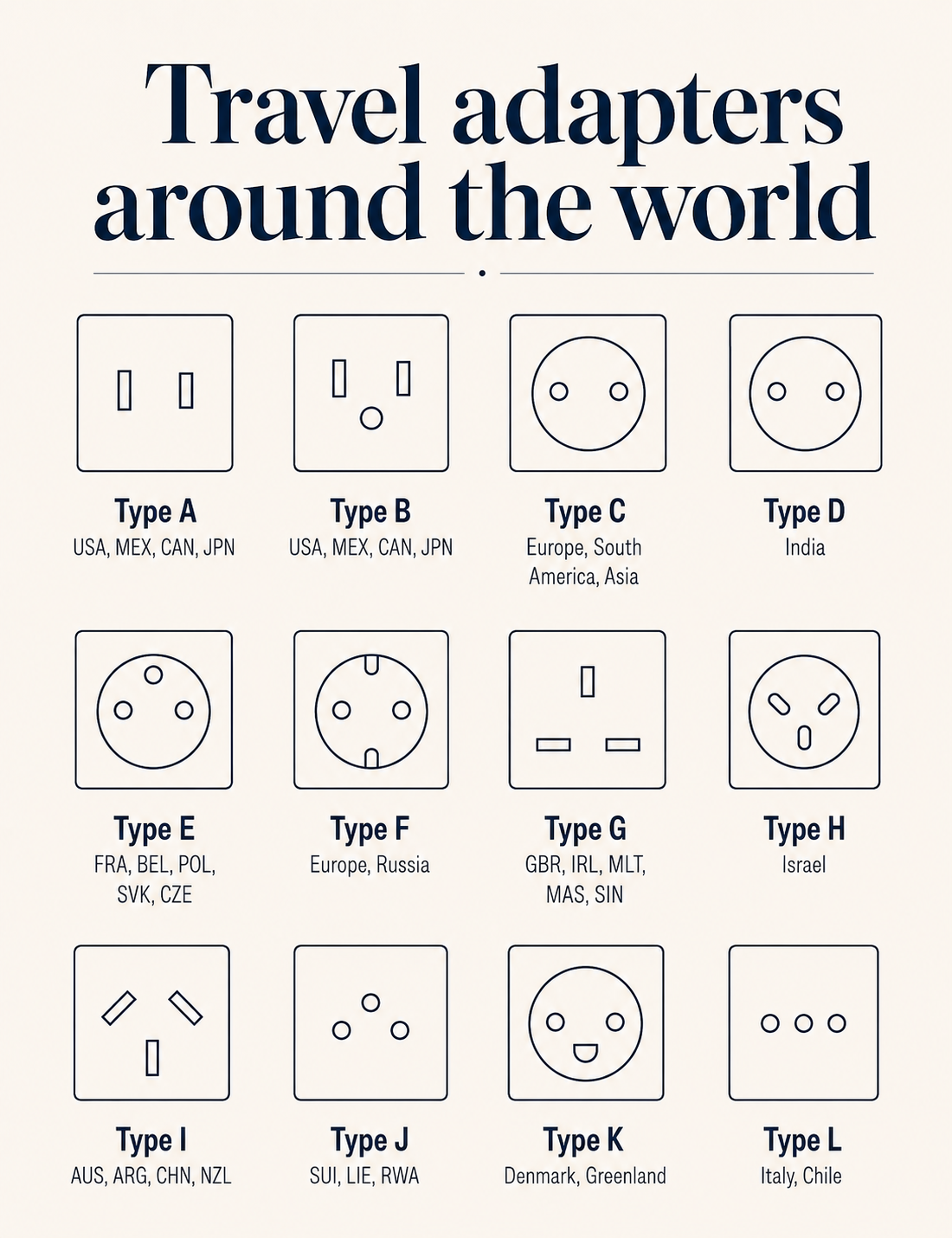
Part of the confusion comes from the fact that the world still uses 15 types of domestic plug systems, lettered A through O. Those letters were assigned by the U.S. Department of Commerce’s International Trade Administration, and they are descriptive rather than formal standards in themselves.
A few of these appear far more often in everyday travel. Types A and B are used in the United States, Canada, Japan, and much of Central America. Type C is the widely familiar two-round-pin style used across most of Europe and in many parts of Africa, South America, and Asia. Type G, with three rectangular prongs, is common in the United Kingdom, Ireland, Malaysia, Singapore, Hong Kong, and parts of the Gulf.
You do not need to memorise every plug type in the world. But it does help to know that the differences are real, common, and not always intuitive. Here is a simple summary illustrating the type of plugs for different countries:
What I Actually Think is Worth Packing
For most people, I think the smartest choice is a well-made universal travel adapter rather than a pile of single-country plugs. Not because it is more exciting, but because it reduces decisions. It suits the way many of us actually travel now: multiple stops, layovers, flexible itineraries, and a reliance on phones, laptops, and small rechargeable devices rather than bulky appliances.
What I personally look for is simple. I want something compact, sturdy, and easy to understand at a glance. I want it to feel tidy in a bag, not like an awkward extra. And if I am being honest, I would rather own one reliable adapter that travels well than keep buying cheap replacements in airports.
That said, I also think it is worth being realistic about what an adapter can and cannot do. It is there to help your charger fit. It is not there to magically make every appliance safe anywhere in the world. That distinction matters more than branding, design, or how many countries the packaging claims to cover.
The Label on Your Charger Matters More Than the Adapter Itself
If there is one habit I would recommend before any trip, it is this: turn over the charger and read the small print. That tiny label tells you far more than the adapter packaging ever will. If it says 100–240V or 110–240V, you are usually in good shape for international travel with just the right adapter. If it shows only one voltage, then that is the moment to stop assuming and check more carefully. Electrical Safety First notes that electricity supplies around the world can range from 100V to 240V, and that voltage mismatch is the real safety issue travelers need to understand.
This is also why I tend to see travel adapters less as gadgets and more as part of travelling thoughtfully. A little attention before you leave saves a surprising amount of friction later.
A Few Things I Would not Do
I would not force a plug into a socket that clearly does not match. I would not assume that every “universal” adapter is right for every appliance. And I would be especially careful with anything that relies on grounding or draws more power than a small charger. Electrical Safety First notes that some travel adaptors are not suitable for appliances that require an earth connection, and that adapters of that kind should only be used with clearly marked double-insulated equipment.
In other words, the sleekest setup is still the safest one: phone, laptop, camera, watch charger, perhaps a small power bank, and an adapter that does exactly what you need without pretending to do more.
The Calmer Way to Think About It
What I like about understanding travel adapters properly is that it takes the drama out of them. Once you know the difference between plug shape and voltage, the whole thing becomes much easier. You stop buying blindly. You pack more intentionally. And you travel with one less avoidable complication. For me, that is the appeal;
My take: Good travel gear should make a trip feel lighter, not more technical. A travel adapter is a small object, but it is also a useful reminder that the best things to pack are often the ones that quietly solve a problem before it becomes one.
When I travel, I tend to rely on a few of these options myself. They come in a range of sizes and features, which makes it easier to keep everyday essentials; from phones to other devices, charged and ready along the way. Here are a few worth considering:
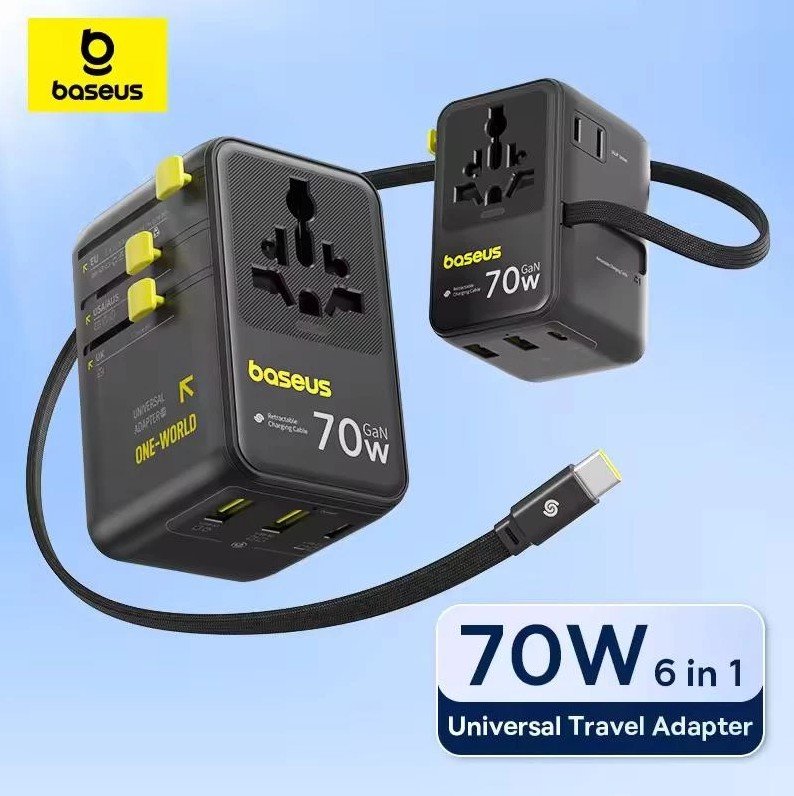
Baseus Universal Travel Adapter
This universal travel adapter is a compact all-in-one travel charger that can power up to 6 devices at once in over 200 countries. Equipped with 70W fast charging, a built-in retractable USB-C cable, multiple AC and USB ports, and slide-out plugs for UK, EU, US, and AU sockets. The adapter also supports dual-voltage pass-through for compatible appliances and includes built-in safety features such as fuse protection, overload protection, and short-circuit protection.
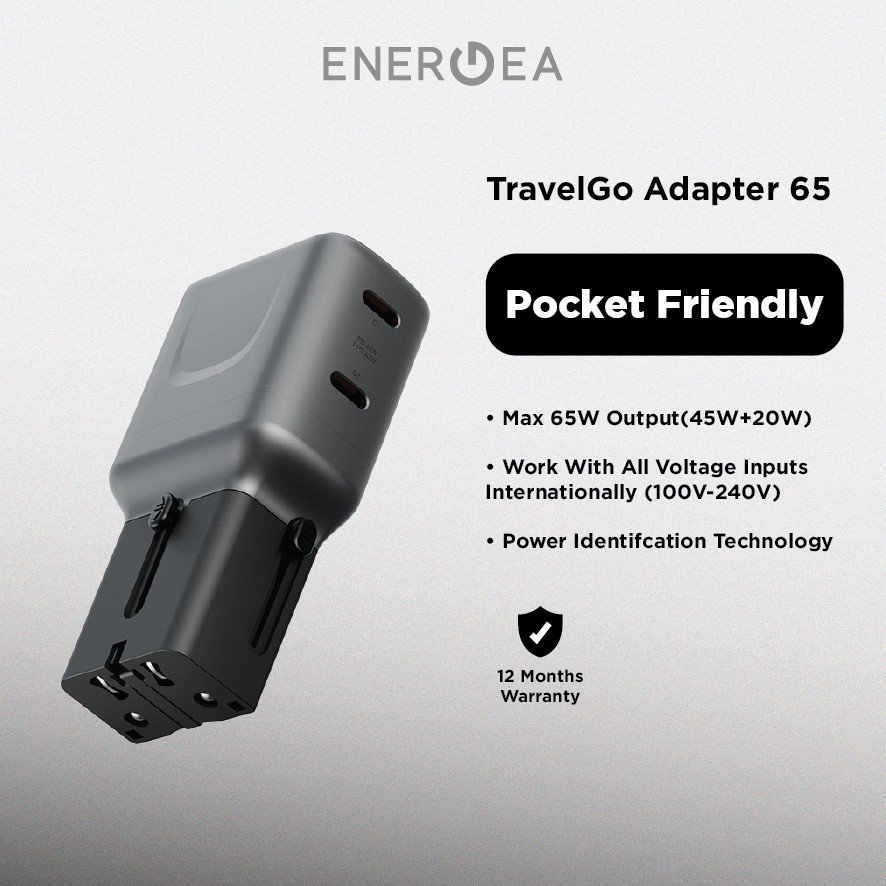
ENERGEA TravelGo - Portable Travel Adapter
The ENERGEA TravelGo is a compact, lightweight travel adapter designed for use in over 200 countries. It features two USB-C ports with up to 65W single-port output, making it suitable for charging laptops, while also supporting dual charging your devices at the same time. With interchangeable plugs, a secure pin-lock system, international 100–240V compatibility, and built-in safety and smart power identification features, it is practical and portable for travelling.
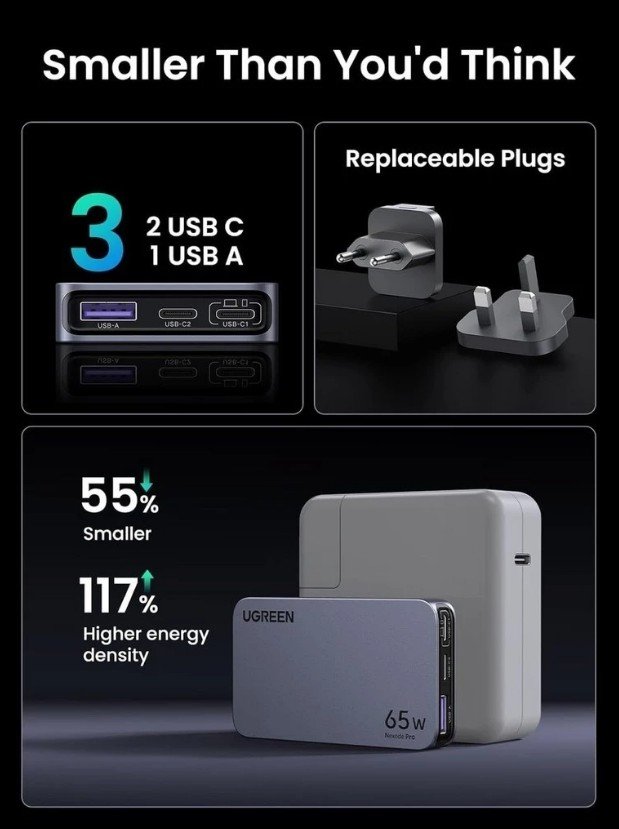
UGreen Nexode Pro 65W Ultra-Slim Travel Charger
This is a unique mention – a pocket charger instead of adapter that I carry with me whenever I travel around. It’s a compact travel-friendly charger with interchangeable US, UK, and EU plugs, making it convenient for international use. It features 2 USB-C ports and 1 USB-A port, with smart power distribution for up to 3 devices charging at once, while delivering up to 65W fast charging for laptops, phones, and tablets. This pocket travel charger efficient high-speed charging in a slim, lightweight design, with broad device compatibility and built-in safety protection.
Essential Takeaway
A travel adapter changes the plug shape, not the voltage. If your charger says 100–240V, you will usually only need the right adapter. Check the label, buy one good universal option, and let that be enough.